SEC Stadiums If They Held 1,000,000 People
This is a just-for-fun size comparison: imagine your favorite SEC stadium scaled up to host one million fans at once. Below are quick location notes and a concept image for each. (No, we’re not suggesting anyone attempt this—just marvel at the sheer scale!)
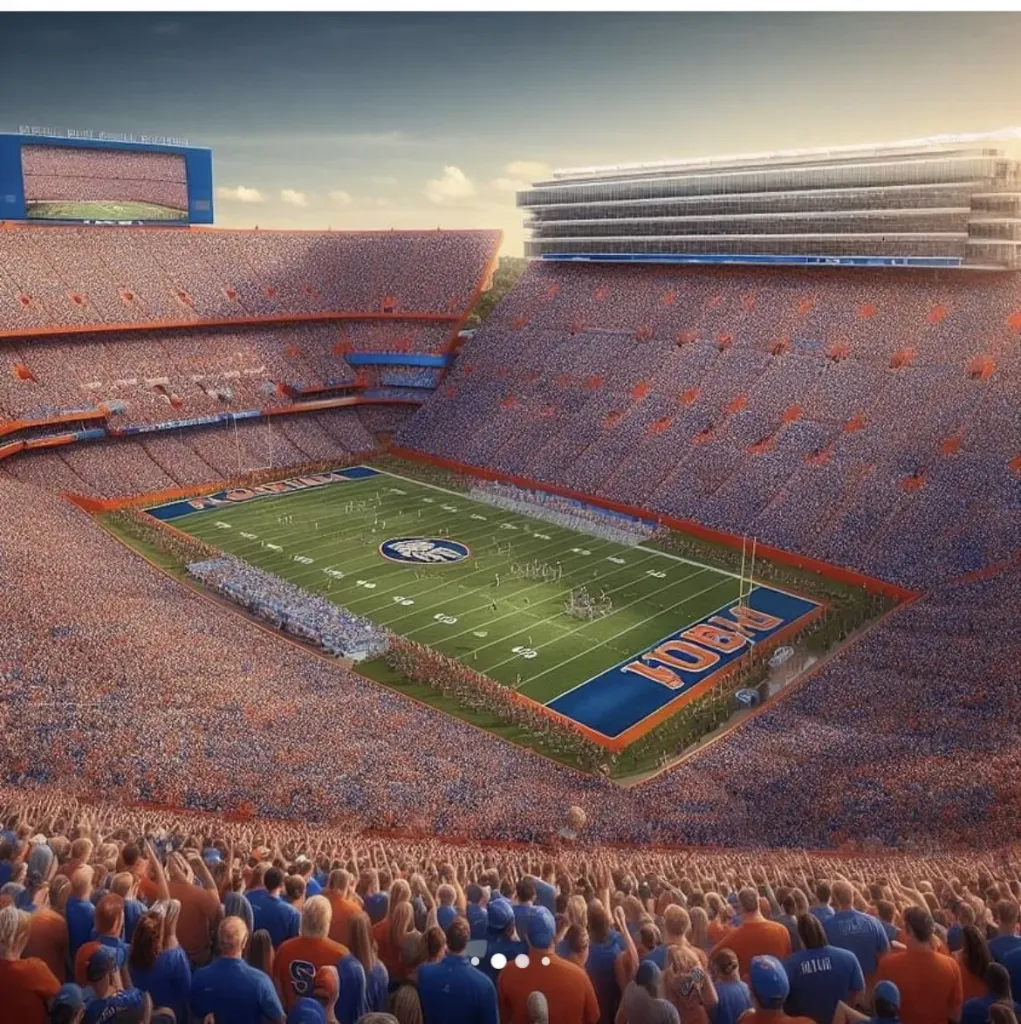
Florida — Ben Hill Griffin Stadium
“The Swamp” is famous for its wall of sound and humid intensity. Now picture the bowl expanded far beyond campus boundaries—multiple tiers spiraling up and out like a stacked city, with concourses wide enough to feel like avenues. A million fans would transform the in-game experience into something closer to a metropolitan festival, with distributed viewing plazas, sound towers, and redundant transit loops to move people safely.
From a planning standpoint, the real challenge wouldn’t be the structure alone—it’d be everything else: water, shade, cooling, and postgame egress across Gainesville’s grid. Our “million-seat” thought experiment makes even a traditional SEC Saturday feel small.
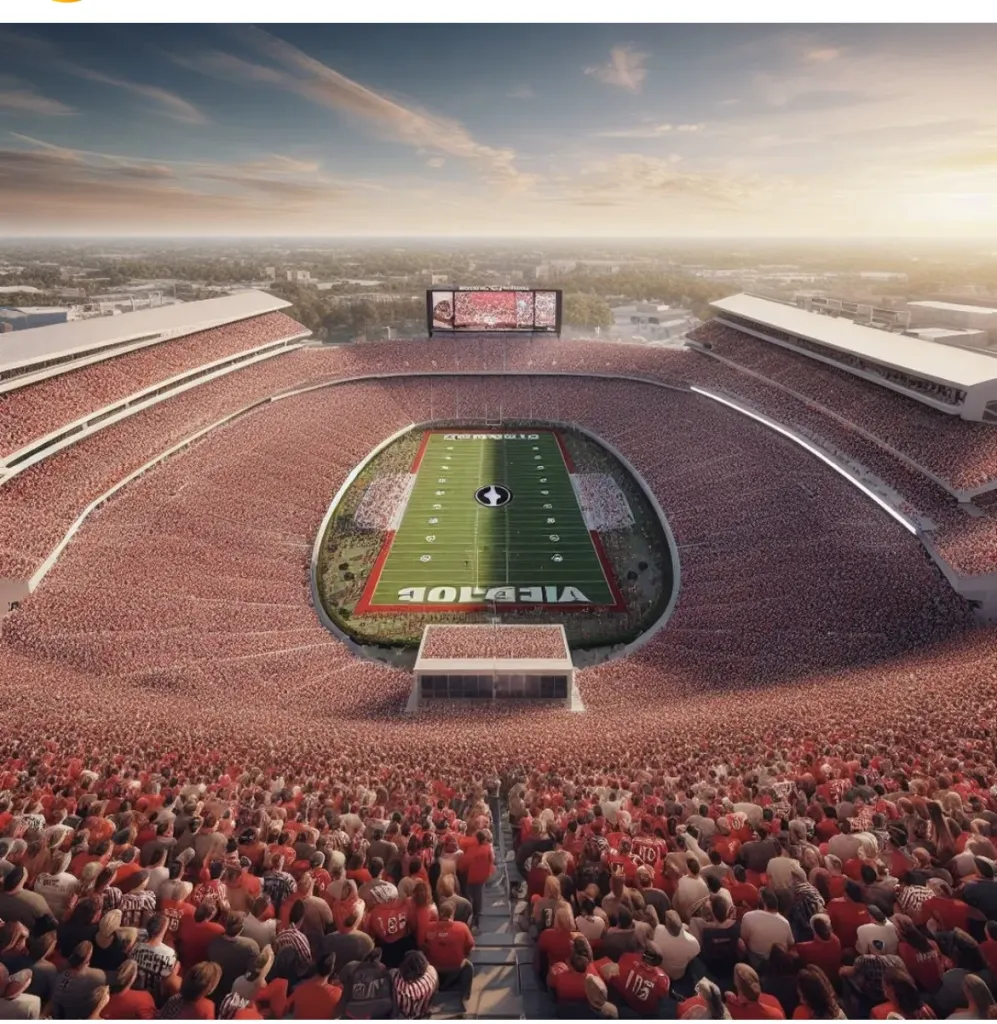
Georgia — Sanford Stadium
Between the hedges becomes between the horizons. Athens’ classic in-town setting means a million-seat Sanford would stretch across campus districts, creating a ring of terraces and galleries overlooking the field from staggering heights. Imagine concourses with greenways and shade canopies, and “neighborhoods” of concessions so fans can stay put during the surge of peak moments.
The Dawgs’ home atmosphere is already thunderous. At this imaginary scale, coordinated audio, synchronized lighting, and layered crowd sections would be essential—turning collective noise into a choreographed roar that rolls across Athens.
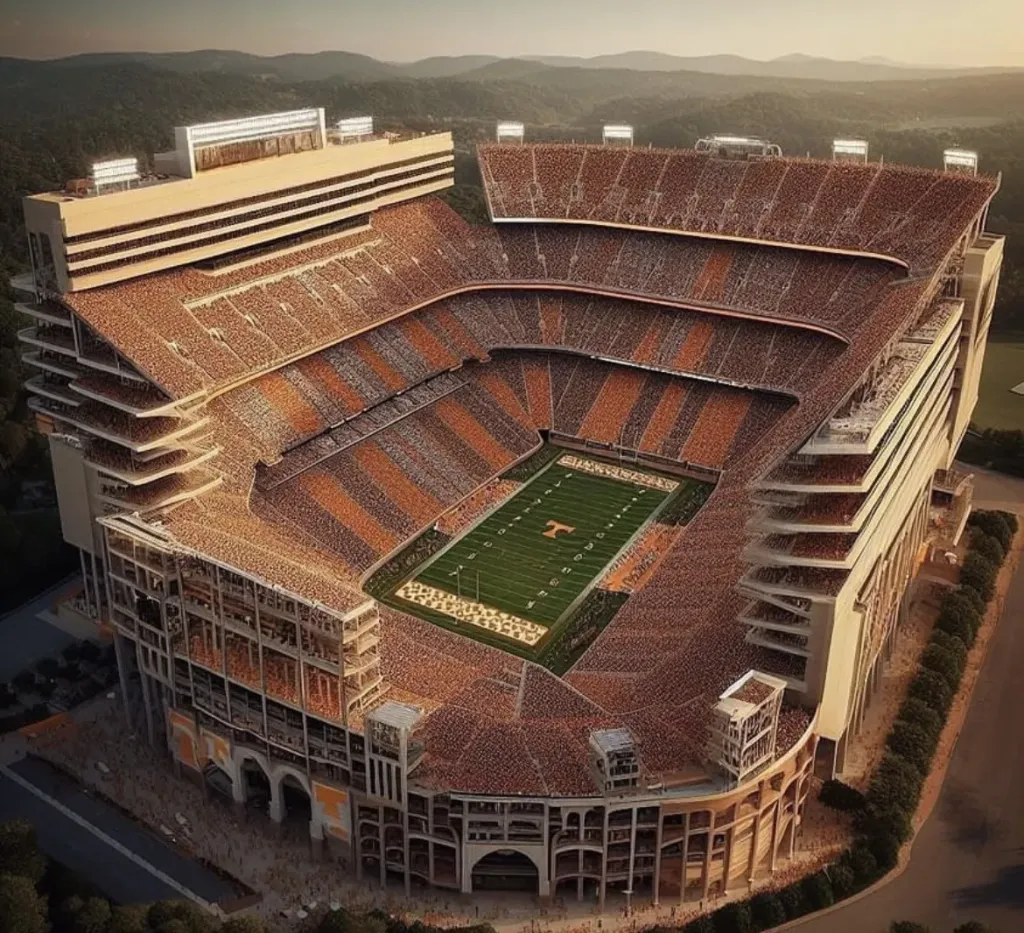
Tennessee — Neyland Stadium
Neyland’s riverfront setting is iconic. In a million-seat version, the Tennessee River becomes a transportation artery: water shuttles and floating docks feeding multi-level entries along the shoreline. Vertical circulation cores—glass elevators and helical ramps—would move fans through stacked decks as checkerboard vistas spill into the skyline.
Knoxville’s hills and water create natural amphitheaters; the imaginary upper tiers would echo that terrain, creating long sightlines and airy gaps for breeze and light. On fall Saturdays, the river and the city would glow orange for miles.
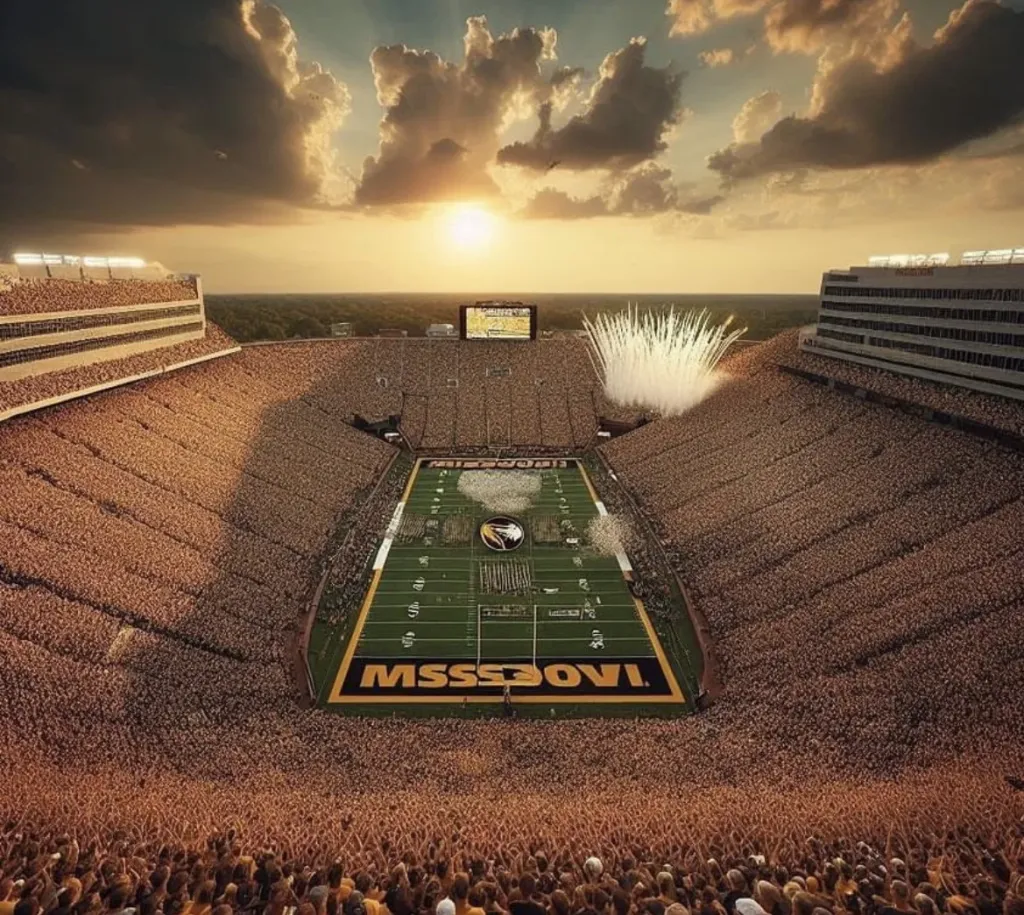
Missouri — Faurot Field (Memorial Stadium)
Faurot Field’s hillside “M” is a campus landmark. In our scale-up, those slopes become terraced parks embedded into the outer concourses—places to gather before crowds ascend to their levels. The million-seat shell wraps Columbia like a ribbed coliseum, with generous portals framing views of campus and town.
The heart of the stadium—sightlines to the field—remains the star. But everything around it evolves into urban infrastructure: pedestrian spines, shaded plazas, and distributed food halls to keep fans comfortable through the length of a day-long event.
Texas — Darrell K Royal–Texas Memorial Stadium
In Austin, a million-seat DKR would feel like a new district: layered decks stepping up from the Forty Acres and merging with the city’s skyline. Broad concourses would double as promenades with downtown views; entry plazas would plug into rail, bus, and rideshare hubs to move fans in waves before and after kickoff.
Longhorn game days are already a spectacle—scaled to a million, they’d become citywide events. Think coordinated lighting along the outer shell, burnt-orange accents washing over the night, and an atmosphere that hums like a music festival fused with a football cathedral.